⚡ Rising Energy Costs
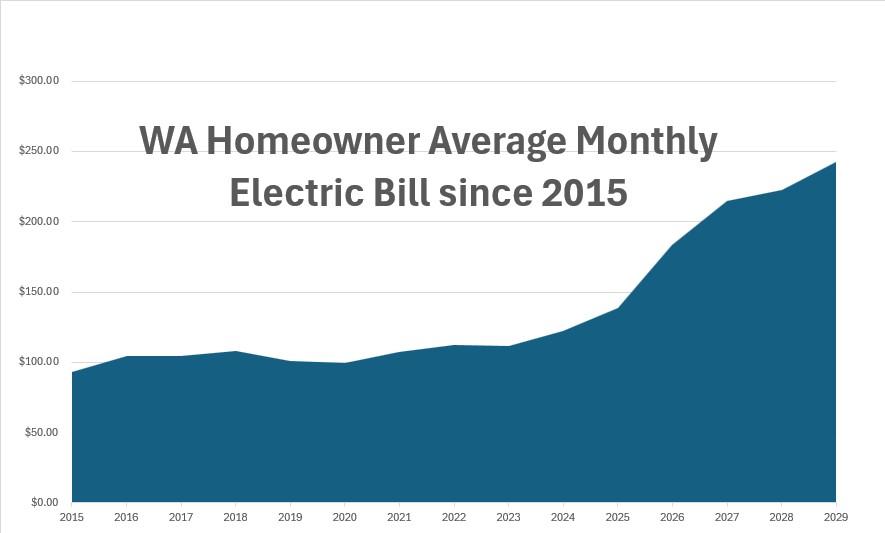
WA Homeowner Average Monthly Electric Bill
2015–2029 · Bills have risen +161% in just 14 years
For decades, Washington State has benefited from some of the lowest electricity rates in the country. Thanks to an abundance of reliable hydroelectric power, homeowners in the Seattle area and throughout Washington State have historically enjoyed stable utility inflation and relatively inexpensive energy.
But that long-standing advantage is beginning to change as skyrocketing utility inflation becomes a new fact of life.
Across the country—and increasingly here in Washington—electricity prices are rising. For many homeowners, the question is no longer if rates will increase, but how much and how quickly. As a result, more households in the Seattle area are starting to explore options like rooftop solar installations and Battery Backup solutions to better manage long-term energy costs.
A National Trend: Energy Prices Are Climbing
Energy inflation has become a major issue across the United States. Utilities are raising rates in response to a combination of structural and economic pressures:
- Aging infrastructure that requires major upgrades
- The transition to cleaner, renewable energy sources
- Increased demand from electrification (EVs, heat pumps, appliances)
- Rising labor, material, and financing costs
- Global instability affecting energy markets
Even in regions historically insulated from these trends, the impact is becoming more noticeable.
What’s Happening Locally: PSE and Seattle City Light
In the Seattle metro area, the two largest utilities—Puget Sound Energy (PSE) and Seattle City Light (SCL)—have both implemented substantial rate increases and have signaled that even larger increases are on the way in the next few years.
PSE customers saw electric rates increase by roughly 12% in 2025, with additional increases of around 6% expected in 2026. Meanwhile,.
PSE has filed with the UTC for rate increases of 16.75% in 2027, followed by increases of 3.76% in 2028, and then another 8.81% increase in 2029. See the details here on the PSE website
Seattle City Light implemented a 5.4% rate increase in 2026, continuing a pattern of steady annual increases in the 4–6% range over the last decade.
Seattle City Light discussed their coming increases in their December 2025 newsletter, “Powerlines”:
“Looking ahead to 2027 and beyond, we anticipate annual rate increases of 7 to 10% to support major investments in infrastructure, modernizing the grid, and advancing clean energy.” SCL Newsletter LINK
Why Electricity Is Getting More Expensive
- The Limits of Hydropower
Washington’s low-cost electricity has long depended on hydropower. However, hydroelectric generation is no longer a flexible or expandable resource.
- Viable dam sites have already been developed and many are being removed over time to restore traditional river flows and critical ecosystems
- Output is limited by water availability, which is being impacted by climate change induced fluctuations in temperatures, erratic snow melt rates, shifting precipitation patterns, etc.
- Dams face increasing ecological scrutiny, particularly around salmon recovery
As a result, hydro can no longer scale to meet growing demand, forcing utilities to invest in alternative—and often more expensive—energy sources.
- Grid Modernization and Clean Energy Mandates
Washington’s Clean Energy Transformation Act (CETA) requires utilities to transition to carbon-free electricity over the coming decades.
This involves:
- Building new renewable energy projects, like the 11 utility-scale wind, solar, and battery projects that are planned in the next 7 years.
- Upgrading transmission and distribution systems, including over $2 billion by PSE in investments over the next 3 years alone.
- Retiring fossil fuel infrastructure, like the coal plant in Centralia, WA that was closed in December 2025: Centralia Coal Plant Closes Despite Federal Order
These investments and changes are necessary, but they come at a cost—and that cost is ultimately passed on to ratepayers.
- Electrification Is Increasing Demand
Seattle-area homeowners are rapidly adopting electric technologies, including:
- Electric vehicles (EVs)
- Heat pumps for heating and cooling
- Electric water heaters and appliances
While these technologies improve efficiency and reduce emissions, they also increase total household electricity consumption.
A home that previously used 8,000 kWh per year might now use 12,000–18,000 kWh after adding an EV and heat pump system. That increased demand places additional strain on the grid and drives the need for more infrastructure investment.
- Time-of-Use Rates and Peak Demand
Local utilities will soon be adopting time-of-use (TOU) rate structures, where electricity costs more during peak demand periods. PSE is still running a TOU pilot program (closed to new enrollment) and SCL plans to start their program soon:
Seattle City Light to Adopt Time-of-Use Structure (for non-solar customers)
TOU rates structures will not be available to net-metered solar customers; net-metered solar customers receive full retail credit for their exported solar energy, and billing becomes exceptionally complicated for solar customers who are also participating in variable rate TOU programs.
However, when utilities stop accepting new net-metering customers (likely to occur in 2027), we will see new solar programs with lower export rates that vary according to time of day. These programs will be designed to help address the same fundamental challenges that TOU programs address:
- The grid must be built to handle peak usage, TOU and new solar programs will incentivize shifting electrical loads to off-peak times to help smooth out the demand curve
- Battery Storage systems will be incentivized and these technologies will help customers optimize the utility savings available through shifting electrical demand by practicing what’s known as energy ‘arbitrage’. This doesn’t make sense for a customer with net-metering, but it will make lots of sense for customers who go solar after net-metering. This is what’s currently happening in California and Hawaii, where over 90% of new solar customers also get battery storage with their projects.
- Global Economic and Geopolitical Pressures
Energy pricing is not purely local. Global dynamics play a significant role.
- Conflicts involving major energy-producing regions, including Iran and Venezuela, contribute to market volatility. The current crisis in the Strait of Hormuz is a perfect example of the vulnerability of having the global economy so heavily dependent upon fossil fuel-based energy sources.
- Trade disputes and tariffs increase the cost of materials like steel, transformers, and electrical components. All of these price inputs have an impact on the cost of generation and distribution from conventional power sources.
- Inflation and supply chain disruptions raise the cost of infrastructure development. Even in a hydro-heavy state like Washington, these global factors contribute to rising electricity costs.
- Note that even though Washington state is know for hydro-power, much of electrical generation does come from fossil fuel generation, often produced out of state but purchased to supplement our growing demand.
What This Means for Homeowners
The combination of rising rates, increasing energy consumption, and more frequent power outages is creating a new reality for homeowners:
- Monthly electricity rates will continue rising, straining household budgets and encouraging consumers to seek alternatives
- As bomb cyclones, atmospheric rivers, seasonal wildfires, flooding, and other weather phenomena become more common in Washington state, power outages are becoming a greater issue for WA homeowners. Over the last few years, homeowners are experiencing more frequent outages, sometimes lasting multiple days.
This is leading many homeowners to consider adding solar to offset rising costs. Adding battery storage also protects the home with the security of reliable back-up power during outages.
Solar in Seattle: A Path Toward Energy Stability
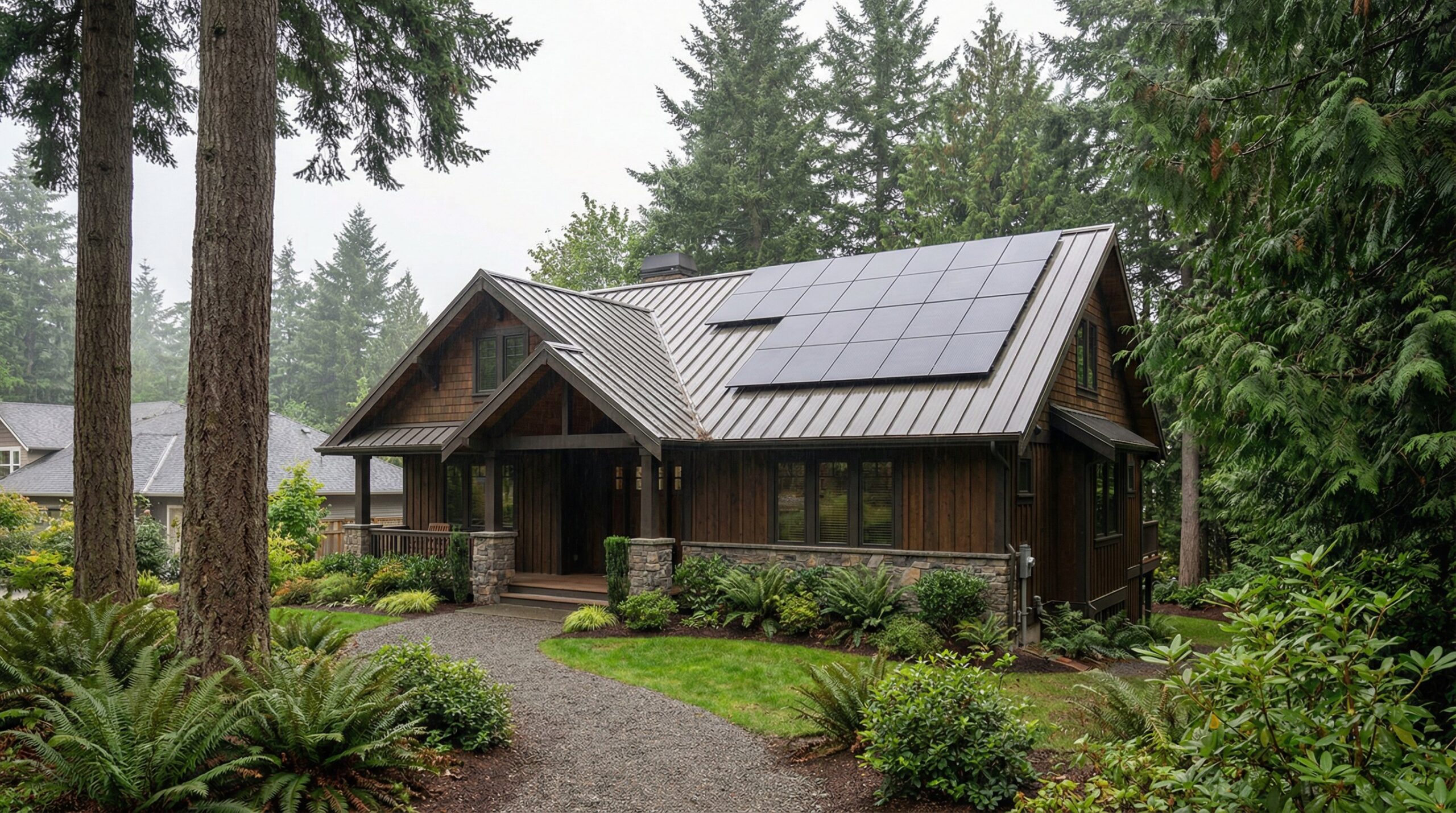
As electricity prices rise, more homeowners are turning to rooftop solar power in Seattle as a way to take greater control of their energy costs.
Solar energy allows homeowners to:
- Generate electricity directly from their rooftop
- Reduce reliance on utility power production
- Offset rising rates with predictable energy production
In Washington, this is particularly attractive due to 1:1 net metering, which allows homeowners to receive full retail credit for excess electricity sent back to the grid.
This means:
- Summer production can offset winter consumption
- Every kilowatt-hour generated provides maximum financial value
Rather than being fully exposed to rising utility rates, homeowners with solar can stabilize a significant portion of their long-term energy costs.
Battery Backup in Seattle: Enhancing Control and Resilience
In addition to solar, many homeowners are now exploring Battery Backup solutions, such as the FranklinWh or Tesla Powerwall solutions: https://sunergysystems.com/residential/storage-solutions/
Battery storage paired with solar provides several key benefits:
- Automatically transfer to backup power during outages. The transfer happens instantaneously and most people don’t even realize that the utility power is out.
- Participate in Virtual Power Plant (VPP) programs that pay customers to provide energy to the grid during peak demand events. PSE successfully rolled out their Flex Battery VPP in 2025 and many new and existing battery customers have enrolled.
Read About PSE’s Flex Batteries Program HERE
As utilities introduce time-of-use rates and grid conditions become more dynamic, battery systems allow homeowners to better manage when and how they use electricity.
For households with EVs or heat pumps, battery storage can play an important role in optimizing energy usage and controlling costs.
A Shift in Mindset
For many years, solar in Washington was seen as a niche or environmentally driven upgrade.
Today, that perspective is changing. More homeowners are viewing Solar & Battery Backup systems as a sensible financial move and as a way to protect their homes from the vulnerability of extended power outages-not just sustainability upgrades.
The goal is not necessarily to eliminate utility bills entirely, but to:
- Reduce long-term cost exposure from out-of-control utility inflation
- Improve predictability in households budgets/operating expenses
- Ensure a stable and reliable supply of power in the event of extended grid outages
Why More Homeowners Are Exploring Their Options Now
With rising utility rates, increasing energy demand, and evolving grid conditions, many Seattle-area homeowners are asking:
- What will my energy costs look like in 5–10 years?
- How can I reduce my exposure to future rate increases?
- What options are available to give me backup power when the grid goes down?
Exploring solar and battery solutions now allows homeowners to make informed decisions before costs rise further AND before net metering programs close to new enrollees.
How Sunergy Systems Helps Homeowners Navigate Solar and Battery Options
At Sunergy Systems, we’ve been helping Washington homeowners navigate solar energy solutions for over 20 years. We understand that every home—and every homeowner’s goals—are different.
Whether you’re simply exploring Solar in the Seattle area or considering a Battery Backup solutions, our team provides:
- Personalized system design based on your home and energy usage
- Clear, transparent analysis of costs and potential savings
- Guidance on available incentives, policies, and utility programs
- Experienced installation backed by decades of local expertise
We offer free consultations to help homeowners understand their options and determine whether solar and battery storage make sense for their specific situation.
Final Thoughts
Washington’s energy landscape is evolving.
Hydropower is no longer unlimited. Electrification is increasing demand. Infrastructure costs are rising. And utility rates are following suit.
While the future of energy pricing is uncertain, one thing is clear:
The era of consistently low electricity rates in Washington is changing.
For homeowners, that creates both challenges and opportunities.
Solutions like solar and battery storage offer a way to adapt—providing greater control, long-term cost stability, and a more resilient approach to energy in an increasingly uncertain world.